
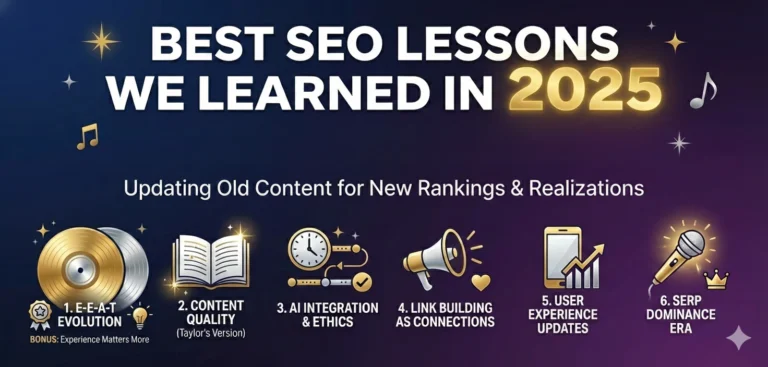
Introduction: Why 2025 Feels Different
Every change in search behaves a little like a new music era. Some shifts are subtle, some force you to rethink how you perform online, and some open new opportunities. Halfway through 2025 we are seeing consistent signals: search engines want clarity, trust, speed, and usefulness more than ever. That means less fiddling with tricks and more focus on work that actually serves people.
I’m Shrikant Bodke. Over the last six years I’ve helped businesses around the world improve SEO performance through practical audits, content work, and technical fixes. This post pulls together the most important lessons I and other practitioners have learned so far in 2025, with clear actions you can apply this week.
Lesson 1 — Intent Still Leads the Show
Search intent matters more than raw keywords. If a page does not answer the user’s actual question quickly and clearly, it will struggle to rank regardless of keyword density.
Actionable steps:
- Revisit top pages and ask if they truly answer the question users type or speak.
- Add quick answers or TL;DR sections at the top of long articles.
- Structure content with headers and short paragraphs so users can scan fast.
Related reading: my post on voice and local intent, Speak Now (Follow-Up): Local SEO & Voice Search for Small Businesses, explains conversational queries and how to target them.
Lesson 2 — Experience, Expertise, Authoritativeness and Trust Matter
E-E-A-T is not a buzzword anymore. Signals such as author bios with credentials, case studies, transparent company information, and verified reviews all help search engines know your content is reliable.
Actions:
- Add concise author bios with real credentials and links to profiles.
- Convert strong client projects into case studies with measurable results.
- Surface reviews and testimonials on service pages.
For why reputation matters, see Reputation Remix: How Reviews, Testimonials & Trust Drive SEO.
Lesson 3 — Refreshing Old Content Often Beats Writing New Stuff
2025 has shown that editing and relaunching your best older posts returns faster wins than publishing random new pages.
What to do:
- Use Google Search Console to find pages with high impressions but low clicks.
- Update stats, examples, visuals and internal links.
- Add FAQ schema for snippet potential.
For a step-by-step method, read The SEO Edit (Taylor’s Version): Updating Old Content for New Rankings.
Lesson 4 — Relationship-Based Links Win More Often Than Link Farms
Automated link schemes and cheap “link packages” stopped delivering in a big way. Links that come from genuine relationships, contributors, and journalists have far more impact.
Do this instead:
- Pitch thoughtful guest pieces to relevant industry sites.
- Respond to HARO opportunities and offer useful expert quotes.
- Build local and niche partnerships that naturally include links.
If you want a practical guide, see Link Building Like a Lover: Building Genuine Connections for SEO and Digital PR Strategies for Building SEO Authority.
Lesson 5 — Site Speed and User Experience Are No Longer Nice-to-Have
Core Web Vitals updates continue to reward fast, mobile-friendly sites. A slow page loses not only rankings but also conversions.
Quick wins:
- Use a reliable CDN and serve images in modern formats like WebP.
- Reduce third-party scripts on high-traffic pages.
- Choose a lightweight theme and optimize render-blocking resources.
If you need a checklist, read Why Web Performance Matters and How to Make Your Site Faster (Swift-ly!).
External tool references: test with Google PageSpeed Insights and monitor Core Web Vitals in Search Console.
Lesson 6 — Use AI Where It Helps and Humans Where It Matters
AI sped up research and first drafts this year, but Google and readers still reward original thought, real examples, and human judgement.
How to combine both:
- Use AI to generate outlines, topic ideas, and content gaps.
- Add original case data, client screenshots, or interviews before publishing.
- Edit AI drafts manually for voice and accuracy.
A useful framework is in AI in Web Development: Saving Time and Helping Us Focus on What Matters.
Lesson 7 — Local Signals and Voice Search Are Growing
Voice searches and “near me” queries are back on the rise. Local signals like Google Business Profile, localized content, and service pages are helping regionally relevant sites jump in visibility.
Immediate steps:
- Optimize Google Business Profile and post regular updates.
- Create location pages with region-specific FAQs and examples.
- Add conversational FAQs that mimic how people speak to assistants.
See Speak Now (Follow-Up): Local SEO & Voice Search for Small Businesses for more.
Lesson 8 — Content Clusters Outperform Scattershot Publishing
Sites organized into pillar pages and supporting clusters are getting a clear advantage. A topic cluster makes it easier for search engines to understand your depth and for readers to find everything they need.
How to build clusters:
- Identify a pillar topic and map 6 to 12 supporting posts.
- Use clear internal linking with descriptive anchor text.
- Keep the pillar updated as you add new supporting content.
I use this approach across posts such as From Blank Space to Page One: Crafting SEO-Friendly Blogs and cluster pieces on performance, content, and reputation.
Lesson 9 — Authenticity Converts Better Than Ads
People read more before they commit. Real examples, transparent pricing, and case studies convert better than catch-all sales copy.
Conversion tweaks:
- Replace vague CTAs with specific next steps such as “Book a free 30 minute review.”
- Use client quotes and data immediately above CTAs.
- Offer downloadable resources that answer decision-stage questions.
If you want a practical conversion blueprint, read Blogging for Leads: How to Turn Readers into Clients.
Lesson 10 — International SEO Requires Respectful Localization
Going global is possible for small teams if you treat markets differently. Localization is not translation; it is adapting tone, examples, and intent.
Checklist:
- Implement hreflang when you have language or regional variations.
- Localize examples, currency, and imagery for the target market.
- Research keyword variations by country, not assume one phrase fits all.
For a hands-on guide, see International SEO: Bridging the Gap Between India and Other Countries.
Real-World Wins from 2025
A few patterns I saw across projects this year:
- Updating a handful of cornerstone posts often delivered faster traffic gains than publishing many new posts.
- Sites that improved speed and reduced JavaScript saw immediate gains in mobile rankings.
- Relationship-based PR placed brand stories on niche sites and drove better referral traffic and conversions than generic link buys.
The takeaway is consistent. You do not need a huge budget to win. You need clearer intent, reliable trust signals, and work that serves the user.
Quick Action Checklist You Can Use This Week
- Pull pages in positions 6 to 20 and prioritize three to refresh.
- Add an author bio and two case study links to a service page.
- Run PageSpeed checks and fix one large image or a blocking script.
- Identify two journalists or bloggers to pitch a data insight or quote.
- Add FAQ schema to one high-impression page.
Conclusion: 2025 Is About Intent, Trust, and Consistent Work
If 2023 and 2024 were about experimentation, 2025 is about refinement. Focus on clear search intent, E-E-A-T signals, speed, and relationship-driven outreach. Those priorities create durable SEO momentum, not short-lived spikes.
If you want help auditing your content, planning a refresh, or building a content cluster that converts, explore my SEO and content marketing services. Let us take your existing work and give it a strong new life.