
UX/UI & Responsive Design
Modern, mobile-friendly designs that deliver smooth, accessible, and engaging user experiences.

Custom WordPress Development
Custom themes, plugins, and WooCommerce stores with easy CMS control for your business.

SEO & Performance Optimization
Boost rankings and speed with SEO-friendly content, caching, lazy loading, and Core Web Vitals.
API Integration & Automation
Seamless API integrations and smart automations that connect tools and streamline workflows.
Maintenance & Support
Reliable updates, backups, and security monitoring to keep your website safe and optimized.

UI/UX designer
Nulla porttitor accumsan tincidunt in ipsum id orci porta dapibus.

Sales marketing award
Nulla porttitor accumsan tincidunt in ipsum id orci porta dapibus.

winning Web award
Nulla porttitor accumsan tincidunt in ipsum id orci porta dapibus.

Best designer
Nulla porttitor accumsan tincidunt in ipsum id orci porta dapibus.






UI/UX & Responsive Web Design
Modern, mobile-friendly designs that deliver smooth, accessible, and engaging user experiences across all devices. I focus on user-centered layouts, fast loading speeds, and responsive interfaces that enhance usability and drive conversions. Your website won’t just look great, it’ll perform flawlessly everywhere.
Custom WordPress Development
I build secure, high-performing WordPress websites tailored to your business needs. From custom themes and plugins to WooCommerce integrations, each solution is designed for easy management, speed, and SEO optimization. You get a flexible, scalable website that grows with your business and delivers measurable results.
API Integration & Automation
Improve your website’s speed, visibility, and user engagement with proven optimization strategies. I fine-tune your site for Core Web Vitals, keyword alignment, and technical SEO compliance to help you rank higher on Google. The result, faster load times, better rankings, and a stronger online presence.
Maintenance & Support
Seamless integrations and smart automations that connect your website with essential tools and platforms. I develop custom API solutions to streamline workflows, reduce manual effort, and improve user experience. Whether it’s payment gateways or CRMs, I make your systems work together efficiently and securely.
SEO & Performance Optimization
Keep your website secure, updated, and optimized with reliable ongoing support. I handle regular maintenance, backups, and performance checks to ensure consistent uptime and speed. With proactive monitoring and expert troubleshooting, you can focus on your business while I take care of your website’s health.



Low Rates
This is a great site for around
the home, and it also has a
useful beauty section.

Quick & Easy
This is a great site for around
the home, and it also has a
useful beauty section.

No Penalty
This is a great site for around
the home, and it also has a
useful beauty section.
Secure Process
This is a great site for around
the home, and it also has a
useful beauty section.
This is a great site for around the home, and it also has a useful beauty section.
Vadim Artyukhin

This is a great site for around the home, and it also has a useful beauty section.
Vadim Artyukhin

This is a great site for around the home, and it also has a useful beauty section.
Vadim Artyukhin

This is a great site for around the home, and it also has a useful beauty section.
Vadim Artyukhin

WooCommerce Performance Optimization: A Complete Guide for Faster Stores
Running a WooCommerce store is very different from running a simple business website. A typical website might have a few pages, a contact form, and a blog. A WooCommerce store can have hundreds or thousands of products, product variations, customer accounts, carts, orders, payment gateways, shipping calculations, analytics, marketing scripts, and third-party integrations. Every one of those components can affect performance. A slow WooCommerce store doesn’t just frustrate visitors. It can directly affect product discovery, add-to-cart activity, checkout completion, conversions, and revenue. I’ve worked with WordPress websites where performance problems weren’t caused by one obvious issue. Instead, several smaller problems had accumulated over time: oversized product images, unnecessary plugins, inefficient scripts, poor caching, database overhead, and hosting limitations. The good news is that you don’t necessarily need to rebuild your WooCommerce store to make it faster. In this guide, I’ll explain the most common WooCommerce performance problems and the practical steps you can take to build a faster, more reliable online store. Why WooCommerce Performance Matters Website speed matters for every website, but it becomes even more important for eCommerce. When someone visits an online store, they may need to: Browse a category Open a product Select variations Add the product to their cart Update quantities Enter customer information Calculate shipping Complete payment That’s a lot of interaction. If the website becomes slow at any point in that journey, customers can abandon the process. Poor performance can contribute to: Higher bounce rates Lower product engagement Fewer add-to-cart actions Checkout abandonment Lower conversion rates Poor user experience Increased server costs WooCommerce itself recommends performance optimization because faster stores provide a better user experience and can contribute to improved conversions. If you’re still deciding whether WooCommerce is the right platform for your business, you may also want to read WordPress vs Custom Development: Which Is Right for Your Business?. How to Check Your WooCommerce Store’s Performance Before changing anything, measure the current performance of your store. Don’t start installing five optimization plugins simply because a speed score looks low. First identify what is actually causing the problem. Useful tools include: Google PageSpeed Insights Google Search Console GTmetrix Chrome Lighthouse Query Monitor WebPageTest Test important page types separately: Homepage Product category Product page Cart Checkout My Account This is important because a WooCommerce product page can have completely different performance characteristics from a static About page. 1. Choose Good WooCommerce Hosting Your hosting environment is the foundation of your store’s performance. A poorly configured shared hosting environment can become a bottleneck when traffic, product queries, or checkout activity increases. Look for hosting that provides: Adequate CPU resources Sufficient RAM Fast storage Current PHP versions Object caching Server-side caching CDN support Reliable database performance Automatic backups Security monitoring Don’t choose hosting based solely on the lowest monthly price. For an eCommerce store, a few extra pounds or rupees per month can be far cheaper than losing customers because your website is slow during peak traffic. 2. Optimize Product Images Product images are often one of the biggest contributors to page weight. A store may have: Product gallery images Thumbnails Product category images Banners Promotional graphics Manufacturer images Uploading large original images directly from Photoshop, a camera, or a design tool can create unnecessarily large pages. Better approach Before uploading product images: Resize them appropriately Compress them Use modern formats where appropriate Serve responsive image sizes Lazy-load images below the fold WooCommerce’s own performance documentation recommends image compression, responsive images, and lazy loading as important optimization techniques. Don’t make every product image 4000px wide just because the original photograph is that size. The browser doesn’t need a 4K image when the product thumbnail is displayed at 300px. 3. Use Caching Carefully Caching can dramatically improve WooCommerce performance, but eCommerce caching requires more care than caching a normal website. Static pages such as: About Contact Blog posts Some category pages can often be cached aggressively. But dynamic pages and customer-specific content require special handling. For example: Cart Checkout My Account Customer-specific information should not simply be treated like static pages. WooCommerce’s performance documentation specifically recommends configuring caching so dynamic pages such as cart and checkout aren’t incorrectly cached. A badly configured caching system can create strange problems such as: Incorrect cart contents Stale product information Incorrect customer information Checkout issues Performance optimization should never come at the expense of store functionality. 4. Implement Object Caching Page caching isn’t the only type of caching that matters. Object caching can reduce repeated database work by keeping frequently accessed data available in memory. Technologies such as: Redis Memcached can be useful depending on your hosting environment and application architecture. This becomes particularly valuable for stores with: Large product catalogs High traffic Complex queries Many concurrent users Large order volumes The goal isn’t simply to add caching everywhere. The goal is to reduce unnecessary work. 5. Optimize Your WooCommerce Database WooCommerce stores can accumulate a considerable amount of data. Your database may contain: Products Variations Orders Customer information Product metadata Order metadata Transients Scheduled actions Plugin data Logs Over time, poorly maintained databases can become increasingly difficult to work with. Regularly review: Post revisions Expired transients Spam comments Unused plugin data Excessive autoloaded options Database indexes Scheduled actions WooCommerce’s documentation specifically recommends database maintenance and removing unnecessary data as part of performance optimization. However, never perform aggressive database cleanup on a production store without a backup and proper testing. A database cleanup tool can remove data you still need if it isn’t configured correctly. 6. Use High-Performance Order Storage (HPOS) If you run a WooCommerce store, HPOS is an important performance-related feature to understand. High-Performance Order Storage (HPOS) stores order data in dedicated WooCommerce tables rather than relying on the traditional WordPress posts and postmeta tables. WooCommerce describes HPOS as a database structure designed specifically for eCommerce, with dedicated tables and indexes intended to improve scalability and reduce database workload. HPOS became enabled by default for new WooCommerce installations starting with WooCommerce 8.2, while existing stores can migrate after compatibility and synchronization checks. If you’re running an older store, don’t simply switch it on without checking plugin and custom-code compatibility. This is particularly important if your store uses: Custom order integrations ERP systems CRM integrations Custom reporting Older WooCommerce extensions Direct database queries WooCommerce has also continued improving HPOS performance. Recent releases have included improvements around order queries, cache priming, and database performance. 7. Audit Your Plugins and Extensions More plugins don’t automatically mean a slower website. The real problem is what those plugins are doing. A plugin might: Load JavaScript on every page Add CSS globally Run database queries Add scheduled tasks Make external API requests Modify WooCommerce queries Add third-party tracking Review every plugin and ask: Does this plugin provide enough business value to justify its performance cost? Pay particular attention to: Page builders Product filters Search plugins Analytics plugins Marketing automation Chat widgets Social feeds Review systems Product comparison tools WooCommerce recommends evaluating plugin performance and using tools such as Query Monitor to identify extensions that negatively affect performance. 8. Don’t Ignore WooCommerce AJAX and Dynamic Requests WooCommerce relies heavily on dynamic functionality. Examples include: Cart updates Product filters Variation selection Shipping calculations Mini-cart updates Checkout interactions These requests can become expensive when poorly implemented. If your store has hundreds of products or complex filtering, monitor database queries and AJAX requests rather than focusing only on the initial page load. A page can score reasonably well in a speed test while still feeling slow when a customer interacts with the store. That’s why real user interactions matter. 9. Optimize JavaScript and CSS WooCommerce stores frequently load more assets than necessary. Potential sources include: Theme CSS WooCommerce CSS Page builder CSS Plugin CSS Product filter scripts Payment gateway scripts Analytics Marketing tools Instead of loading everything everywhere, load assets only where they are needed when technically practical. For example, a payment gateway script doesn’t necessarily need to execute on your About page. WooCommerce recommends minifying HTML, CSS, and JavaScript and deferring non-critical JavaScript where appropriate. Be careful with aggressive minification and JavaScript delay settings, though. A configuration that improves a PageSpeed score but breaks the checkout is not an optimization. It’s a bug wearing a performance badge. 10. Use a CDN A Content Delivery Network can serve static assets from servers closer to your visitors. This can be particularly useful if your customers are distributed across different geographical locations. A CDN can help deliver: Images CSS JavaScript Fonts Other static assets WooCommerce’s official performance documentation lists CDN usage as one of its recommended optimization techniques and mentions providers such as Cloudflare, Fastly, and Amazon CloudFront. For a store targeting both India and international customers, CDN configuration can be especially useful. 11. Optimize the Product Catalog Large product catalogs create their own performance challenges. A store with 50 products behaves differently from a store with 50,000 products. Pay attention to: Product attributes Variations Product filters Related products Cross-sells Upsells Search Category queries Avoid loading hundreds of products unnecessarily on a single page. Use pagination or carefully designed infinite scrolling where appropriate. 12. Improve WooCommerce Search Search is extremely important for stores with large catalogs. Customers who use site search often have strong purchase intent. But complex search queries can become expensive. Consider: Search indexing Database optimization Efficient query design Search result pagination Lightweight search solutions Caching where appropriate A faster search experience can improve both usability and conversions. 13. Optimize Checkout Performance Checkout is arguably the most important page on an eCommerce website. A customer who has already decided to buy should not encounter: Slow payment processing Delayed shipping calculations Broken checkout fields Excessive scripts Unexpected page reloads Confusing validation errors Audit: Payment gateways Shipping integrations Tax calculations Address validation Fraud detection Marketing scripts Analytics scripts Every additional integration can potentially add processing time. Test checkout using real transactions in a safe environment rather than relying only on a homepage speed test. 14. Reduce Third-Party Scripts Marketing teams love tools. And developers eventually end up with a website containing: Google Analytics Meta Pixel Google Tag Manager Heatmaps Chat widgets CRM tracking Email marketing scripts Review widgets Advertising scripts Each additional script can affect performance. Audit third-party services regularly. Ask: Is this script generating enough business value to justify its performance cost? If not, remove it. 15. Monitor Core Web Vitals Core Web Vitals provide useful insight into how real users experience your website. The three primary metrics are: LCP Measures loading performance. INP Measures responsiveness to user interactions. CLS Measures visual stability. For a deeper explanation, read: Core Web Vitals Explained for Business Owners You can also test your store with Google PageSpeed Insights and monitor field data through Google Search Console. 16. Choose a Lightweight WooCommerce Theme Your theme provides the foundation for your store’s frontend. A theme overloaded with: Animations Sliders Custom widgets Multiple font libraries Unused scripts can add unnecessary page weight. Prioritize: Clean code Responsive design Accessibility Minimal dependencies Efficient CSS Good WooCommerce compatibility A visually impressive store doesn’t need to be technically bloated. 17. Optimize Fonts Fonts are easy to overlook. Using multiple font families and dozens of font weights can increase page weight. Instead: Limit font families Limit font weights Use modern font formats Consider self-hosting fonts where appropriate Preload only genuinely critical fonts Use sensible fallback fonts Don’t load six font weights when your design uses two. 18. Keep WooCommerce and WordPress Updated Updates aren’t only about security. They can also include: Performance improvements Database improvements Bug fixes Compatibility improvements Better browser behavior WooCommerce 10.8, for example, included multiple performance improvements, including cache priming for HPOS queries and reductions in N+1 queries. Always test updates on a staging environment before applying major changes to a revenue-generating store. 19. Test Performance After Every Major Change A common mistake is optimizing a website once and forgetting about it. Performance changes whenever you: Install a plugin Change themes Add tracking Add products Change hosting Add payment gateways Change checkout functionality Create a simple performance baseline and test regularly. At minimum, test: Page What to Monitor Homepage LCP, page weight Category Product queries, images Product Images, variations, scripts Cart Dynamic requests Checkout AJAX, payment, shipping Account Authentication and queries WooCommerce Performance Optimization Checklist Before considering your store optimized, work through this checklist: Fast and properly configured hosting Optimized product images Responsive image delivery Page caching configured correctly Object caching where appropriate CDN configured Database maintained HPOS compatibility checked Unnecessary plugins removed JavaScript optimized CSS optimized Third-party scripts audited Lightweight theme Core Web Vitals monitored Checkout tested WooCommerce and WordPress updated Performance tested after major changes How Much Can WooCommerce Performance Actually Improve? There’s no universal percentage because every store starts from a different point. A store with poor hosting, oversized images, dozens of unnecessary plugins, and no caching may have significant room for improvement. Another store that is already well optimized may only see incremental gains. That’s why I recommend measuring before and after every major optimization. Don’t optimize for a number on a speed-testing tool alone. Optimize for: Faster pages + better interactions + smoother checkout + more completed purchases. That’s what actually matters to a business. Common WooCommerce Performance Mistakes Here are some of the mistakes I see most frequently: Installing Multiple Caching Plugins More caching plugins don’t necessarily mean more speed. They can conflict with each other. Optimizing Only the Homepage Your product, cart, and checkout pages matter much more to revenue. Ignoring Database Performance Large stores can accumulate substantial amounts of order and metadata. Using Huge Product Images High-resolution photography doesn’t mean every image needs to be served at its original resolution. Delaying Everything Aggressive JavaScript delay can break important functionality. Ignoring Checkout A fast homepage doesn’t matter much if checkout takes five seconds to respond. Never Testing After Updates A plugin update can change performance or introduce new queries. Final Thoughts WooCommerce performance optimization isn’t about installing one magic plugin. It’s a combination of: Good hosting Efficient caching Optimized images Clean code Smart database management Lightweight themes and plugins Proper CDN configuration Efficient checkout Continuous monitoring The best approach is to identify the biggest bottleneck first and fix that before moving to smaller optimizations. If your WooCommerce store is slow, don’t immediately rebuild it. Measure. Diagnose. Optimize. Test. Repeat. A well-optimized WooCommerce store can provide a faster shopping experience, support better SEO performance, and give customers fewer reasons to abandon their purchase. If you need help improving your WordPress or WooCommerce website, explore my web development services or get in touch to discuss your project. Frequently Asked Questions Why is my WooCommerce website slow? Common causes include poor hosting, large product images, excessive plugins, inefficient JavaScript, database overhead, poorly configured caching, third-party scripts, and complex WooCommerce queries. How can I speed up my WooCommerce store? Start by optimizing images, improving hosting, configuring caching correctly, reducing unnecessary plugins and scripts, optimizing the database, using a CDN, and monitoring Core Web Vitals. Does WooCommerce slow down WordPress? WooCommerce adds additional functionality and database operations compared with a simple WordPress website, but WooCommerce itself isn’t automatically slow. Proper hosting, configuration, optimization, and efficient extensions can support fast stores. Does WooCommerce performance affect SEO? Performance contributes to user experience and page experience. Core Web Vitals are useful performance metrics, although speed is only one part of a broader SEO strategy. What is HPOS in WooCommerce? HPOS, or High-Performance Order Storage, is WooCommerce’s dedicated order storage system that stores order data in optimized custom tables rather than relying on the traditional WordPress posts and postmeta tables. Should I use a caching plugin with WooCommerce? Yes, caching can significantly improve performance, but it must be configured correctly. Dynamic pages such as cart and checkout need special handling and generally should not be served as ordinary cached pages. Can a CDN improve WooCommerce performance? Yes. A CDN can serve static assets such as images, CSS, and JavaScript from geographically distributed servers, potentially reducing latency for visitors. How often should I optimize my WooCommerce store? Performance should be monitored continuously. Run a detailed review whenever you make major changes to hosting, themes, plugins, checkout, product catalogs, or integrations.
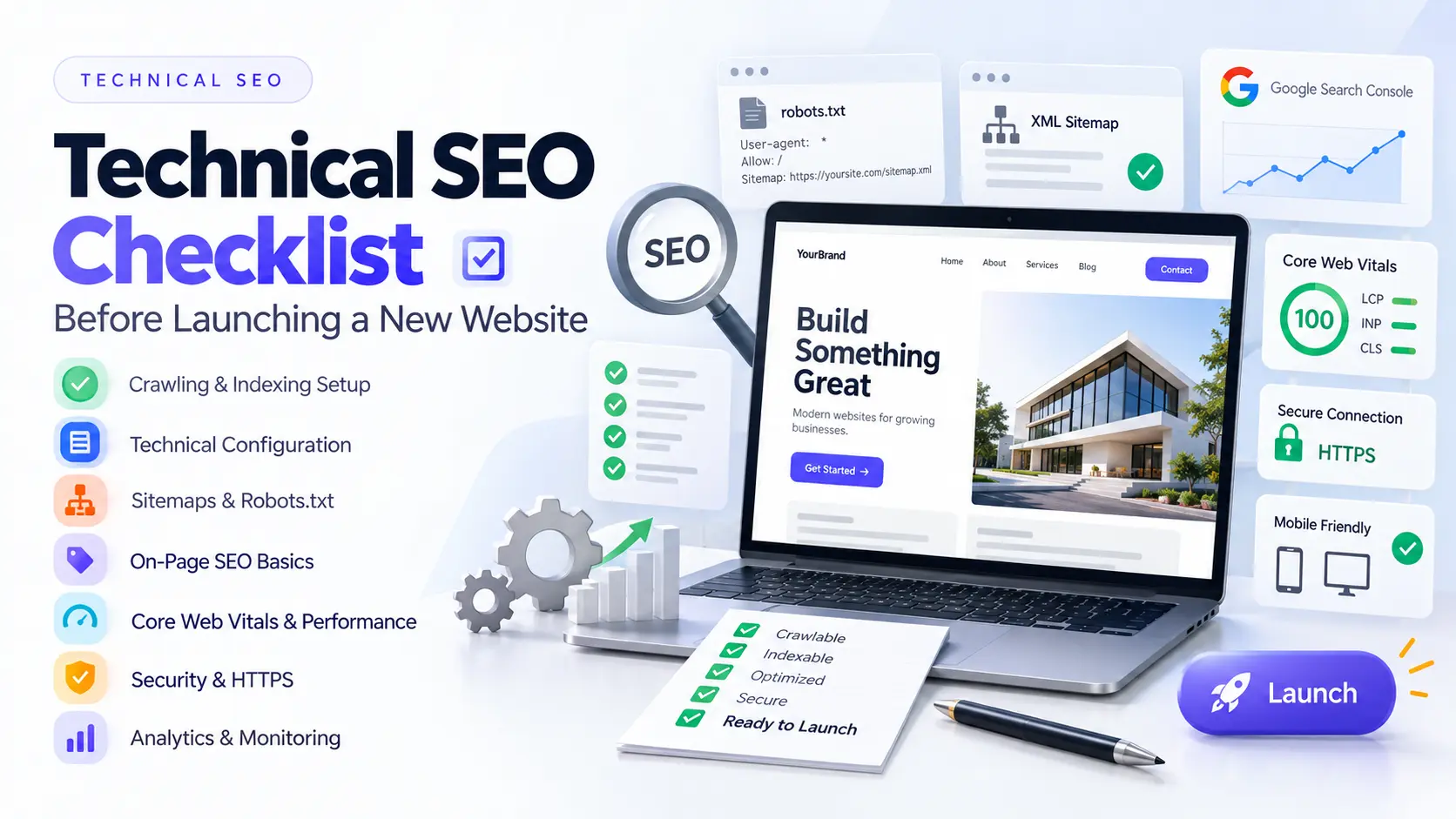
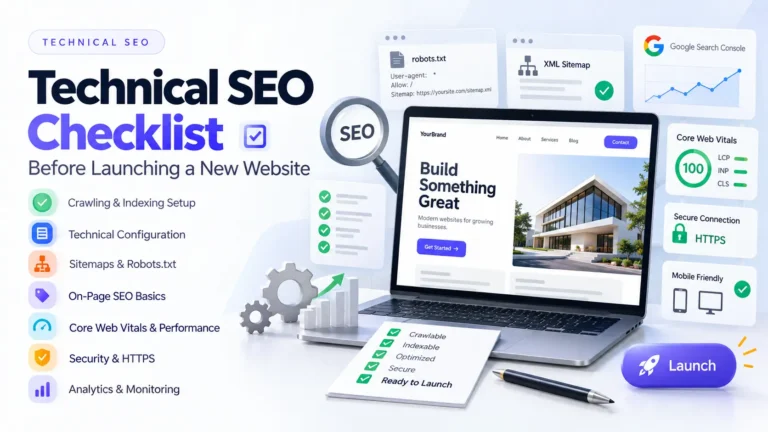
Technical SEO Checklist Before Launching a New Website
Technical SEO Checklist Before Launching a New Website Launching a new website is exciting. The design is approved. The content is uploaded. The buttons work. The contact form has been tested. Then the website goes live. A few days later, you discover that Google isn’t indexing some of your pages. Or the old URLs weren’t redirected. Or the XML sitemap contains staging URLs. Or the production website still has a noindex directive left over from development. These aren’t theoretical problems. They are the kinds of issues that can turn a successful website launch into an SEO cleanup project. I’ve worked on website development, redesigns, performance optimization, and SEO projects where technical details that looked minor during development ended up having a much bigger impact after launch. That’s why technical SEO shouldn’t be something you check after launching a website. It should be part of the launch process itself. In this guide, I’ll walk you through a practical technical SEO checklist before launching a new website, covering crawlability, indexing, URLs, redirects, metadata, structured data, performance, mobile usability, security, analytics, and post-launch monitoring. Why Technical SEO Should Be Checked Before Launch Google’s basic technical requirements are surprisingly straightforward: Googlebot needs to be able to access the page, the page needs to return a successful response, and the page needs to contain indexable content. Meeting those requirements doesn’t guarantee indexing, but failing them can prevent a page from being eligible for indexing in the first place. The problem is that website launches involve a lot of moving parts. A developer may be focused on: Design Functionality Forms APIs Database configuration Hosting Deployment An SEO specialist may be focused on: URLs Metadata Redirects Indexing Structured data Internal linking A business owner may simply be asking: “Is the website ready to launch?” A proper technical SEO checklist connects all three perspectives. The Technical SEO Pre-Launch Checklist Here’s the checklist I recommend running before pressing the publish button. 1. Confirm the Production Domain Before launch, confirm exactly which domain will be the primary version. For example: https://example.com https://www.example.com Choose the preferred version and make sure alternative versions resolve consistently. Also check: HTTP → HTTPS WWW → non-WWW or vice versa Trailing slash consistency DNS configuration SSL certificate Production URLs Staging URLs You don’t want Google discovering multiple versions of the same website. 2. Remove Staging noindex Rules This is one of the most important launch checks. During development, developers commonly prevent search engines from indexing staging websites using: <meta name=”robots” content=”noindex”> That’s completely reasonable on a private development environment. The problem occurs when the same directive survives the production deployment. A page containing a valid noindex directive can be removed from Google’s search results when Googlebot can crawl and see that directive. Before launch, check: Meta robots tags X-Robots-Tag HTTP headers CMS indexing settings SEO plugin settings Staging environment configuration Password protection Checklist: Production pages are indexable Important pages don’t contain noindex No staging environment is being referenced Production isn’t password protected X-Robots-Tag isn’t accidentally blocking indexing This one check can save weeks of confusion. 3. Check robots.txt Your robots.txt file tells crawlers which URLs or paths they are allowed to request. A common launch mistake is accidentally carrying a staging rule such as: User-agent: * Disallow: / That effectively tells crawlers not to crawl the site. Google explains that robots.txt controls crawler access, while noindex is the appropriate mechanism when you want a crawlable page excluded from Google’s index. Before launch: robots.txt exists Important pages aren’t blocked Staging-only rules are removed Admin areas are handled appropriately Important assets aren’t accidentally blocked Sitemap location is included where appropriate Don’t use robots.txt as a replacement for canonicalization or noindex. 4. Generate and Check the XML Sitemap Your XML sitemap should help search engines discover the URLs you actually want indexed. Before launch, make sure it contains: Canonical URLs Live URLs Indexable pages Correct HTTPS URLs Correct production domain It shouldn’t contain: 404 pages Redirect URLs Staging URLs noindex pages Duplicate URLs Google describes sitemaps as a way to provide information about important pages and files and recommends absolute URLs in submitted sitemaps. A sitemap helps discovery, but it does not guarantee indexing. After launch: Open Google Search Console. Go to Sitemaps. Submit or verify your sitemap. Check for errors. Monitor indexing. 5. Verify Canonical URLs Canonicalization tells search engines which URL represents the preferred version of substantially similar content. For example, your website might accidentally expose: /example/ /example /example/?source=google http://example.com/example/ /https://www.example.com/example/ You don’t want your site architecture creating unnecessary ambiguity. Google considers signals including redirects, rel=”canonical” annotations, and sitemap inclusion when determining canonical URLs. However, a canonical declaration is a hint, not an absolute command. Before launch: Important pages have the correct canonical Canonicals use production URLs HTTP isn’t declared canonical Staging URLs aren’t canonical Canonicals aren’t pointing to unrelated pages Sitemap URLs and canonical URLs are consistent 6. Build a 301 Redirect Map If you’re launching a completely new website, this is still important. If you’re replacing an existing website, it becomes critical. Before changing URLs, create a spreadsheet containing: Old URL New URL Redirect /about-old/ /about/ 301 /services-old/ /services/ 301 /contact-us/ /contact/ 301 Every important old URL should have a clear destination. Avoid redirect chains such as: Old URL ↓ Redirect A ↓ Redirect B ↓ New URL Ideally: Old URL ↓ New URL This becomes especially important during website redesigns. If you’re planning a redesign, see Website Redesign Without Losing SEO Rankings. 7. Check HTTP Status Codes Every important URL should return the expected HTTP status. Typical responses include: 200 → page works 301 → permanent redirect 302 → temporary redirect 404 → page doesn’t exist 410 → content permanently gone 500 → server error Google’s technical requirements specifically require a page to work successfully and return an HTTP 200 response for it to be eligible for indexing. Before launch, crawl the staging website and identify: 4xx errors 5xx errors Redirect chains Redirect loops Broken assets Broken internal links 8. Review Your URL Structure Your URLs should make sense to both users and search engines. Prefer: /example.com/technical-seo-checklist/ over: /example.com/page?id=1938 Good URLs are generally: Descriptive Consistent Readable Stable Easy to share Avoid changing URLs unnecessarily after launch. A well-planned URL structure also makes future website migrations much easier. 9. Check Page Titles and Meta Descriptions Every important indexable page should have a meaningful title. Avoid: Home Page 1 Untitled Services when a more descriptive title is appropriate. For example: Technical SEO Checklist Before Launching a New Website is much more informative. Check: Unique title Accurate title Main topic reflected naturally Meta description written No duplicate metadata Important pages aren’t missing metadata Don’t turn titles into keyword lists. Write them for people first. 10. Check Heading Structure Review the heading hierarchy. A page should have a clear primary topic and logical subtopics. For example: H1 Technical SEO Checklist Before Launching a New Website H2 Crawlability and Indexing H2 Technical Configuration H2 Performance H3 Core Web Vitals H2 Security H2 Analytics Don’t choose headings simply because they look visually attractive. Use CSS to control appearance. Use headings to communicate structure. 11. Test Internal Links Internal links help users navigate your website and help search engines discover related content. Google’s crawling documentation specifically notes that important pages should be reachable through links. Before launch, click through: Navigation Footer links Breadcrumbs Blog links Service links CTA buttons Related articles Product/category links Check for: 404 errors Wrong URLs Staging URLs HTTP links Redirected internal links Orphan pages Don’t wait until after launch to discover that half your footer still points to the old website. 12. Check Structured Data Structured data provides search engines with additional context about your content. Depending on the website, useful types can include: Article Breadcrumb Organization LocalBusiness Product Review Event Only implement schema that genuinely describes the visible page content. Google recommends validating structured data with the Rich Results Test and checking how Google sees the page through URL Inspection. Structured data can make pages eligible for certain enhanced search appearances, but Google does not guarantee that those enhancements will appear. For a blog, an Article schema is usually more relevant than adding every possible schema type. 13. Optimize Images Before Launch Large images can significantly increase page weight. Before uploading: Resize images Compress them Use modern formats where appropriate Provide meaningful alt text Use responsive image sizes Lazy-load non-critical images Don’t upload a 5000px photograph if the website displays it at 900px. Image optimization is especially important for the homepage hero section because large above-the-fold images can affect loading performance. If you’re working with WordPress, my guide Why Your WordPress Website Is Slow (And How to Fix It) covers more practical performance improvements. 14. Check Core Web Vitals Performance should be tested before launch, not after customers start complaining. The three Core Web Vitals are: LCP: loading performance INP: responsiveness CLS: visual stability Google recommends: LCP: 2.5 seconds or less INP: less than 200 milliseconds CLS: 0.1 or less These thresholds represent a good user experience, although good Core Web Vitals alone do not guarantee high search rankings. For a business-friendly explanation, see Core Web Vitals Explained for Business Owners. Test important templates rather than checking only the homepage. For example: Homepage Service page Blog article Product page Contact page Checkout page 15. Test Mobile Experience Google uses the mobile version of a site as the basis for indexing. That means mobile isn’t an optional “nice to have.” Test your website on: Android phones iPhones Tablets Different screen widths Touch interfaces Check: Navigation Buttons Forms Menus Typography Images Tables Popups Cookie banners Sticky elements A website can look perfect on a developer’s 27-inch monitor and still be frustrating on a 6-inch phone. 16. Verify HTTPS Your production website should use HTTPS. Check: SSL certificate HTTP → HTTPS redirects Mixed content Secure forms Secure assets Correct canonical URLs Google recommends HTTPS as part of providing a secure experience. Don’t assume the SSL certificate is enough. Check the actual live website. 17. Check JavaScript Rendering Modern websites increasingly rely on JavaScript. That’s fine. But important content shouldn’t become inaccessible simply because JavaScript fails or isn’t rendered as expected. Modern development workflows are also increasingly incorporating AI-assisted development and “vibe coding” approaches. If you’re interested in how AI is changing the way developers build websites and web applications, read Vibe Coding & AI-Powered Web Development: The Future is Already Here Check whether search engines and users can access: Navigation Main content Internal links Product information Headings Structured data Important calls to action Google documents that JavaScript websites have additional considerations around how crawlers access and render content. If you’re less familiar with the technologies behind modern websites, my Web Development Basics: Beginner’s Guide to HTML, CSS & JavaScript explains how HTML, CSS, and JavaScript work together to create a website. 18. Check Accessibility Accessibility isn’t just an SEO checkbox. It’s part of building a usable website. Before launch, check: Keyboard navigation Form labels Focus states Colour contrast Alt text Heading hierarchy Button labels Accessible navigation Error messages A website that works well for more people is generally a better website. 19. Check 404 and Error Pages Your 404 page should actually return a 404 status. Don’t create a visually attractive “Page Not Found” page that returns 200 OK. The page should help visitors recover by providing options such as: Homepage Search Main navigation Popular content Relevant categories A useful 404 page turns a dead end into another opportunity to navigate. 20. Configure Analytics Before Launch Don’t launch the website and then remember analytics three days later. Set up the measurement infrastructure before launch. Depending on your project, this may include: Google Analytics 4 Google Tag Manager Google Search Console Conversion tracking Form submissions Phone clicks Email clicks E-commerce events Test the events. Don’t assume they work simply because the tracking code exists. 21. Verify Conversion Tracking SEO traffic is useful. Knowing what that traffic does is even more useful. Track meaningful business actions such as: Contact form submissions Quote requests Phone calls Email clicks Purchases Account registrations Downloads Booking requests Your website should measure business outcomes, not just pageviews. 22. Check Open Graph and Social Metadata When someone shares a page on LinkedIn, Facebook, X, or another platform, you want the correct: Title Description Image URL Check Open Graph metadata for important pages. A technically perfect page can still look terrible when shared if the social preview uses the wrong image or an old title. 23. Check Favicon and Brand Assets This isn’t directly a ranking factor, but it is part of launch quality. Check: Favicon Apple touch icon Logo Social sharing image Browser title Brand consistency Small details affect perceived professionalism. 24. Check Your XML Sitemap After Deployment This deserves a second check. Why? Because staging and production environments can generate different URLs. After deployment, open the actual production sitemap. Confirm: Production domain HTTPS Correct URLs No staging URLs No redirects No 404s No accidental noindex pages Then submit it through Search Console. 25. Crawl the Production Website Don’t stop at staging. Once the website is live, perform another crawl. Use tools such as: Screaming Frog Sitebulb Google Search Console PageSpeed Insights Compare production against staging. Look specifically for: Missing pages Broken links Redirects Canonical changes Metadata changes Indexability problems Server errors Unexpected URL changes The production environment is the environment that matters. Launch-Day Technical SEO Checklist Use this as your final go/no-go list: Indexing No accidental noindex Robots.txt is correct Googlebot can access important pages Production domain is live Sitemap is accessible URLs URL structure is finalized Canonicals are correct Redirects are working No redirect chains 404 pages return 404 On-Page SEO Unique titles Meta descriptions Correct H1 Logical headings Optimized images Internal links Performance Core Web Vitals tested Images optimized CSS optimized JavaScript tested Caching configured Mobile performance checked Security HTTPS working No mixed content SSL certificate valid Admin access secured Production credentials protected Measurement Google Analytics configured Google Search Console verified Conversion tracking tested Important forms tested E-commerce tracking tested where applicable What to Check After Launch SEO doesn’t stop when the deployment finishes. Launching a technically sound website is only the beginning. You also need to monitor indexing, organic visibility, content performance, and search traffic over time. For a broader look at building sustainable search visibility, read You Belong With SEO: How to Build Long-Lasting Google Rankings. The first few days after launch are extremely important. Within the First 24 Hours Check: Website accessibility Robots.txt Sitemap HTTPS Forms Analytics Search Console Critical redirects Important pages Within the First Week Monitor: Indexed pages Crawl errors Search Console warnings Server errors Organic traffic Rankings Redirects Core Web Vitals Conversion tracking Google notes that crawling and indexing can take time, so don’t panic if a newly launched page doesn’t appear in Search immediately. The important thing is to continue monitoring your site’s visibility and technical health rather than treating launch day as the end of your SEO work. For more practical SEO guidance on maintaining your search visibility, see You Belong With SEO: Making Sure Google Can’t Shake You Off. Use Search Console’s URL Inspection tool to understand how Google sees important URLs and request crawling when appropriate. New Website vs Website Redesign There’s an important difference. With a brand-new website, you’re establishing your technical foundation. With a redesign or migration, you’re also protecting existing SEO equity. That means a redesign requires additional checks around: Existing URLs Backlinks Redirects Existing rankings Canonical URLs Indexed pages Sitemap changes Internal links If you’re redesigning an existing website, read Website Redesign Without Losing SEO Rankings before changing your URL structure. The Biggest Technical SEO Mistakes Before Launch If I had to narrow the entire checklist down to the problems I would never want to discover after launch, they would be: 1. Staging noindex left enabled Your website exists, but search engines are being told not to index it. 2. Incorrect robots.txt Important content becomes inaccessible to crawlers. 3. Missing redirects Old URLs suddenly become 404s. 4. Wrong canonical URLs Pages point search engines toward the wrong version. 5. Sitemap contains staging or broken URLs Your discovery signals don’t match your actual website. 6. Poor mobile experience The website works on desktop but breaks on phones. 7. Slow performance The website launches with avoidable performance problems. 8. Analytics wasn’t tested The website generates leads, but nobody knows where they came from. 9. Broken internal links Users and crawlers encounter dead ends. 10. No post-launch monitoring Problems remain unnoticed for weeks. These are exactly the kinds of technical SEO issues developers should catch before launch. For a deeper look at the technical problems developers commonly introduce during development, read 10 Technical SEO Mistakes Developers Still Make in 2026. For a broader look at common development mistakes, read 10 Technical SEO Mistakes Developers Still Make in 2026. Final Thoughts A website launch isn’t finished when the developer clicks Deploy. It’s finished when the production website has been checked from the perspective of: Users Search engines Developers Business owners Analytics Security Performance Technical SEO should be part of the development workflow from the beginning, not a task added after the website has already gone live. Before launch, make sure your website is: Crawlable. Indexable. Fast. Mobile-friendly. Secure. Well-structured. Measurable. And then check it again after launch. Because sometimes the most important SEO problems aren’t visible in the design. They are hiding in the code, headers, redirects, configuration, and deployment environment. If you need help building or optimizing a technically sound website, explore my Web Development Services or get in touch to discuss your project. Frequently Asked Questions What should I check before launching a new website for SEO? Check crawlability, indexing directives, robots.txt, XML sitemap, canonical URLs, redirects, metadata, internal links, structured data, Core Web Vitals, mobile usability, HTTPS, analytics, and conversion tracking. What is the most common SEO mistake before launching a website? One of the most damaging launch mistakes is accidentally leaving staging restrictions such as noindex or Disallow: / enabled on the production website. Should I submit my sitemap when launching a new website? Yes. After confirming that the sitemap contains the correct production URLs, submit it through Google Search Console. A sitemap helps Google discover URLs, but submitting one doesn’t guarantee indexing. Should I check Core Web Vitals before launching? Yes. Test important page templates before launch and again after deployment. Google recommends good Core Web Vitals as part of providing a strong page experience, but good scores alone don’t guarantee high rankings. Do I need redirects when launching a new website? If existing URLs are being changed, yes. Create a redirect map and send important old URLs to their relevant new destinations using permanent redirects. What is a canonical URL? A canonical URL is the preferred version of a page when multiple URLs contain duplicate or substantially similar content. Canonicalization helps search engines understand which URL should represent the content. How long does it take Google to index a new website? There is no fixed timeframe. Google must discover, crawl, and evaluate the pages, and meeting technical requirements does not guarantee indexing. Search Console’s URL Inspection tool can help you check how Google sees individual URLs. Does technical SEO guarantee higher Google rankings? No. Technical SEO helps remove crawling, indexing, rendering, and performance barriers, but rankings depend on many factors. Google explicitly notes that meeting its technical requirements does not guarantee crawling, indexing, or serving in Search.


UI/UX
Landing Pages, User Flow, Wireframing, Prototyping, Mobile App Desifn.

Branding
HTML/CSS, JavaScript, Animation, WordPress, Responsive Website.
SEO Optimization
Search Engine

Development
HTML/CSS, JavaScript, Animation, WordPress, Responsive Website.