
Introduction
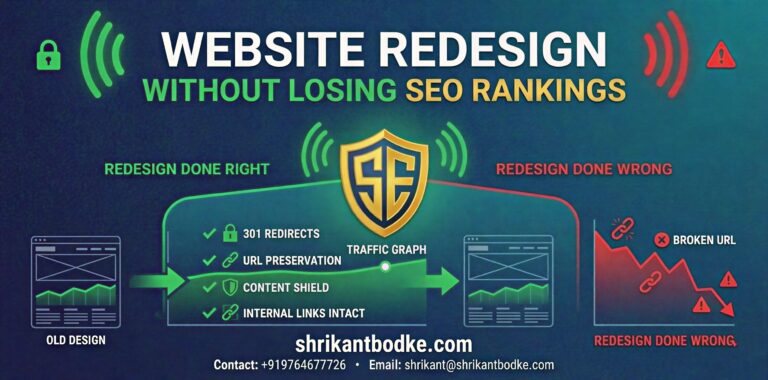
A website redesign is supposed to improve things. But in reality, many redesigns quietly damage SEO. Rankings drop. Traffic dips. Leads slow down. The site looks better, but performance takes months to recover, sometimes longer.
This usually happens because SEO is treated as something to fix after launch instead of something to protect during the redesign.
The good news is simple. Losing SEO during a redesign is not inevitable. If the process is handled correctly, you can redesign your website without losing rankings and in some cases even improve them.
This guide walks through the exact steps that prevent SEO damage during a redesign, based on real-world rebuilds and migrations.
Why Website Redesigns Often Lose SEO
SEO issues during redesigns rarely come from one big mistake.
They usually happen because of a combination of small decisions, such as:
- URLs changing without proper redirects
- High-performing pages being removed or rewritten blindly
- Internal links breaking or disappearing
- Page speed getting worse after the redesign
- Technical SEO checks being skipped before launch
Design teams focus on visuals. Developers focus on functionality. SEO often gets left in between.
That gap is where rankings are lost.
Step 1: Audit the Existing Website Before You Redesign Anything
Before touching layouts, themes, or designs, you need to understand what already works.
This step protects your SEO foundation.
Audit the following:
- Pages that bring organic traffic
- Pages ranking for valuable keywords
- URLs with backlinks
- Internal linking structure
- Existing technical SEO issues
Tools like Google Search Console and Screaming Frog help identify which pages carry real SEO value. Those pages must be protected during the redesign.
This is where a proper technical SEO audit matters. It is not optional if SEO is important to your business.
You can read Google’s official guidance on this process here.
Step 2: Lock Your URL Structure Early
URLs are one of the most sensitive SEO elements during a redesign.
If URLs change without planning:
- Rankings drop
- Backlink value is lost
- Crawl errors increase
Best practices:
- Keep URLs unchanged wherever possible
- If a URL must change, map the old URL to the new one
- Use permanent 301 redirects
- Avoid redirect chains
This level of control is much easier with custom WordPress development.
Platforms that limit URL flexibility often create SEO problems later.
For a deeper look at how URL changes affect SEO, this Ahrefs guide explains common migration mistakes clearly.
Step 3: Preserve High-Performing Content
A redesign often triggers content rewrites.
This is risky when done without data.
Instead of deleting or rewriting pages blindly:
- Keep pages that already rank
- Improve clarity and structure, not intent
- Avoid removing content with search visibility
- Merge thin pages carefully
SEO value builds over time. Removing content without understanding its role often causes silent ranking losses.
Service-related content should continue supporting pages like SEO Services
Step 4: Maintain and Improve Internal Linking
Internal linking is frequently damaged during redesigns.
Menus change. Layouts change. Links disappear.
Before launch:
- Recreate internal links intentionally
- Ensure blogs still support service pages
- Avoid orphan pages
- Use descriptive anchor text
Your redesign should strengthen topical clusters, not break them.
For example, blogs should continue supporting WordPress Development Services and related offerings.
This improves crawlability and reinforces topical authority.
Step 5: Protect Performance During the Redesign
A new design should not make your website slower.
Common performance regressions include:
- Larger unoptimised images
- Heavier fonts
- Extra animations
- Too many third-party scripts
Before launch:
- Test Core Web Vitals
- Optimise images and fonts
- Remove unused scripts
- Test on real mobile networks
Performance directly affects SEO and conversions, especially for service pages. This is where focused website performance optimisation prevents post-launch surprises.
You can validate performance using real user data with Google PageSpeed Insights
Step 6: Handle Technical SEO Before Launch
Never launch a redesigned website without technical checks.
Your pre-launch checklist should include:
- XML sitemap updated and accessible
- Robots.txt reviewed
- Canonical tags verified
- No accidental noindex tags
- Schema markup tested
- Analytics and Search Console connected
Many SEO disasters happen simply because this step is rushed.
Step 7: Monitor Closely After Launch
SEO does not end on launch day.
After the site goes live:
- Monitor Search Console for crawl errors
- Track rankings for important pages
- Watch traffic trends
- Fix issues quickly
Small post-launch adjustments are normal. Ignoring early warning signs is what turns small issues into long-term losses.
When a Redesign Can Actually Improve SEO
A redesign is also an opportunity.
Handled correctly, it allows you to:
- Fix structural SEO issues
- Improve internal linking
- Strengthen service page authority
- Improve Core Web Vitals
- Align content with current search intent
When SEO is part of the process early, a redesign can improve rankings instead of damaging them.
Final Thoughts
- Website redesigns do not lose SEO by accident.
- They lose SEO because search visibility is not protected early enough.
- If your website supports leads, revenue, or authority, redesign decisions must be SEO-aware from day one.
- If you are planning a redesign and want clarity before committing, you can discuss your website redesign here.
- A short conversation now is far easier than fixing lost rankings later.