
Introduction: The Real Question Businesses Ask Too Late
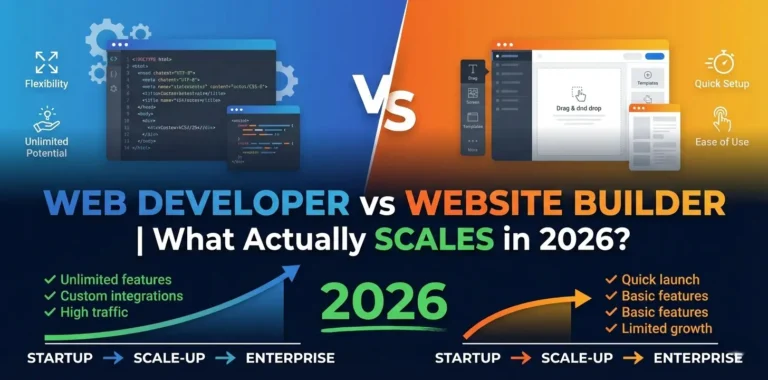
Website builders promise speed and simplicity. Web developers promise flexibility and control.
In 2026, the real question is not which option launches faster or costs less on day one. It is which option can grow with your business without forcing a painful rebuild later.
I have worked with businesses that started on website builders and businesses that invested in custom development early. Some builder-based sites perform fine for years. Many outgrow their platform quietly and pay for that decision later through lost SEO traction, performance issues, or forced migrations.
This is closely tied to the foundation problems explained in SEO-Friendly Website Development Checklist (2026 Edition), where structure and performance decisions made early determine long-term scalability.
What Website Builders Do Well
Website builders exist for a reason. They remove technical barriers and let non-technical users publish something quickly.
Website builders work well when:
- You need a site live very quickly
- The site is simple and mostly informational
- SEO is not highly competitive
- Custom functionality is minimal
- Budget is extremely tight
For early validation or temporary projects, builders can be useful. But as explained in Shake It Off or Step It Up: The Future of SEO, platforms that limit flexibility struggle as SEO expectations evolve.
Where Website Builders Start to Struggle
Most limitations do not show up on day one. They appear when a website starts doing real work for the business.
Common situations where builders struggle:
- SEO becomes competitive
- Performance issues surface
- Custom layouts or logic are needed
- Integrations grow beyond basic tools
- The site needs to support scaling content or services
Many of these issues overlap with performance challenges discussed in Core Web Vitals for Service Websites: What Actually Matters in 2026, where platform overhead directly affects speed and interaction.
What a Web Developer Actually Brings
A good web developer does more than write code.
They think about:
- Long-term site structure
- SEO foundations from day one
- Performance budgets
- Accessibility
- Future expansion
With custom WordPress development, you gain full control over how content, services, and internal links work together. This is especially important once blogging becomes part of your lead strategy, as shown in From Blank Space to Page One: Crafting SEO-Friendly Blogs.
SEO Differences That Matter in Practice
From an SEO perspective, the differences between builders and developer-built sites are subtle at first and significant later.
With a developer-built site:
- Technical SEO is easier to implement correctly
- Core Web Vitals can be optimised at the code level
- Schema markup is fully customisable
- Internal linking can be planned strategically
- Content is not constrained by platform templates
This becomes critical for competitive pages like SEO Services, where small structural advantages influence rankings and conversions.
For a deeper look at how content and structure influence conversions, see The Archer’s Guide to Content Marketing: Aim Your Words to Convert.
Performance and User Experience at Scale
Website builders often load more than they need.
Extra scripts, generic components, and platform-level features affect speed, especially on mobile. This directly impacts user experience and rankings.
A developer-built site can load only what is required and prioritise performance, which ties directly into Why Web Performance Matters and How to Make Your Site Faster (Swift-ly!).
Performance is not just about rankings. It affects trust and conversions, especially for service-based businesses.
Cost Over Time, Not Just at Launch
Builders often look cheaper upfront.
But long-term costs include:
- Monthly platform fees
- Paid add-ons for basic features
- SEO and performance limitations
- Migration costs
Custom development usually costs more initially but avoids the rebuild cycles discussed in The SEO Edit: Updating Old Content for New Rankings, where fixing earlier decisions becomes necessary.
Migration Is Where Most Regret Appears
Many businesses reach out to developers only after hitting platform limits.
Migration challenges often include:
- URL structure changes
- Lost SEO equity
- Content rework
- Design constraints
This is why updating and scaling existing platforms carefully matters more than starting over repeatedly, a theme also covered in Blogging for Leads: How to Turn Readers into Clients.
Which Option Is Right for You
There is no universal answer.
A website builder may be suitable if:
- The site is temporary
- SEO is not a priority
- Custom features are unlikely
Hiring a developer makes sense if:
- The website supports revenue
- SEO and performance matter
- You plan to scale services or content
If your website is expected to build authority and trust, platform choice plays a direct role. This trust-performance link is explained in Reputation Remix: How Reviews, Testimonials & Trust Drive SEO.
Final Thoughts: Scalability Is the Real Metric
The real comparison is not web developer versus website builder.
It is short-term convenience versus long-term scalability.
If your website is part of your growth strategy, investing in a platform that supports performance, SEO, and flexibility usually pays off.
If you want clarity on what makes sense for your situation, exploring WordPress Development Services or SEO Services can help frame the decision before costly commitments are made.